

Where the Myth Around Hypnosis Comes From
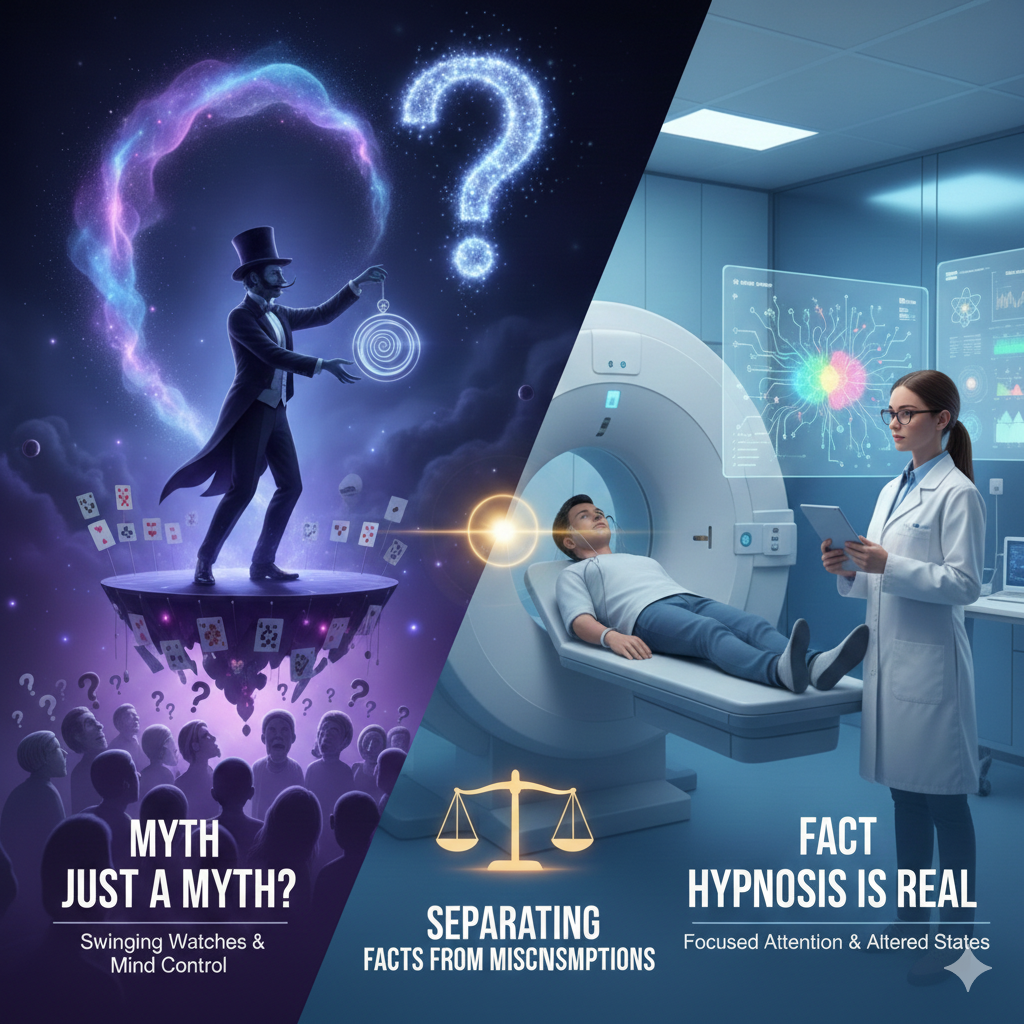
Much of the confusion around hypnosis originates from its portrayal in media and entertainment. Films, television shows, and stage performances often depict hypnosis as a dramatic event where people lose control, forget their identity, or act against their will. These portrayals are designed to entertain, not to educate.
Over time, these exaggerated images have shaped public perception. When people encounter hypnosis in a therapeutic or clinical context, it clashes with what they think hypnosis is supposed to look like. This mismatch leads to doubt and dismissal.
Another source of skepticism comes from the belief that hypnosis works only if someone is gullible or weak-minded. This assumption has no scientific basis, yet it persists because hypnosis is often misunderstood as passive submission rather than active mental engagement.
What “Real” Means in the Context of Hypnosis
To determine whether hypnosis is real, it is important to clarify what “real” actually means. Hypnosis is not a supernatural force, and it is not magic. It does not bypass the brain or override free will. Instead, hypnosis is a real psychological state of focused attention that can be observed, studied, and measured.
In psychology, hypnosis is recognized as a state in which attention becomes highly concentrated, awareness turns inward, and responsiveness to meaningful guidance increases. This state is not imaginary. It is a natural mental process that exists on a spectrum, much like relaxation, concentration, or daydreaming.
People enter hypnotic-like states regularly in everyday life. The difference in hypnosis therapy is that this state is reached intentionally and used for a specific purpose.
Scientific Recognition of Hypnosis
Hypnosis is not based on belief alone. It has been studied extensively within psychology and neuroscience. Brain imaging research has shown that hypnosis is associated with measurable changes in brain activity, particularly in areas related to attention, perception, and emotional processing.
During hypnosis, certain regions of the brain communicate differently than they do during ordinary waking consciousness. This altered communication explains why people can experience changes in perception, such as reduced pain sensitivity or altered emotional responses, without losing awareness.
These findings confirm an important point: hypnosis is not about imagination replacing reality. It is about the brain processing reality differently. This distinction separates hypnosis from fantasy or placebo effects.
Why Hypnosis Feels Subjective
One reason hypnosis is often dismissed as unreal is because it feels subjective. There is no single sensation that defines hypnosis. Some people feel deeply relaxed, others feel mentally alert, and some notice only subtle shifts in attention.
This variability leads people to assume that if hypnosis does not feel dramatic, it must not be real. In truth, many real psychological processes are subtle. Learning, habit formation, emotional regulation, and belief change often occur quietly, without obvious sensation.
The effectiveness of hypnosis is not determined by how intense it feels, but by whether it leads to meaningful changes over time.
Common Myths About Hypnosis
Several persistent myths continue to cloud understanding of hypnosis.
One common myth is that hypnosis involves sleep. In reality, hypnosis is not sleep. Brain activity during hypnosis differs significantly from sleep states. Individuals remain aware and responsive throughout a hypnosis session.
Another myth is that hypnosis removes control. This belief is largely influenced by stage hypnosis. In therapeutic settings, individuals remain fully capable of thinking, speaking, and making decisions. Hypnosis cannot force actions or beliefs that conflict with personal values.
There is also a myth that hypnosis only works if someone believes in it. While openness helps, belief alone does not determine effectiveness. Hypnosis relies more on focus and engagement than belief.
Why Hypnosis Is Often Misjudged
Hypnosis is often judged using the wrong criteria. People expect immediate, visible results or dramatic experiences. When these expectations are not met, they conclude that hypnosis is ineffective or fake.
In reality, hypnosis works internally. Its effects are often noticed in daily behavior, emotional responses, or thought patterns rather than during the session itself. This delayed and subtle impact can be mistaken for ineffectiveness if expectations are unrealistic.
Another reason hypnosis is misjudged is because it does not fit neatly into conventional medical models. Hypnosis does not involve external intervention. It works by helping the mind reorganize itself, which makes its effects harder to quantify at first glance.
The Role of the Subconscious Mind
A key reason hypnosis is real lies in its interaction with the subconscious mind. Much of human behavior is driven by subconscious patterns formed through experience and repetition. These patterns influence reactions automatically, without conscious effort.
Hypnosis allows these patterns to become accessible without triggering defensive responses. This access is not theoretical; it is experienced through shifts in awareness, emotional regulation, and behavior. The mind responds differently when it is calm, focused, and receptive.
This process explains why hypnosis can influence habits, stress responses, and emotional reactions in ways that conscious effort alone often cannot.
Hypnosis Is Not a Shortcut or Illusion
Another misconception is that hypnosis promises instant results. When people do not experience immediate transformation, they conclude that hypnosis does not work.
Hypnosis is not a shortcut. It is a process. Like any form of psychological change, it requires consistency, engagement, and time. Its strength lies in addressing patterns at their root rather than managing symptoms temporarily.
When viewed realistically, hypnosis is neither exaggerated nor disappointing. It functions exactly as a psychological tool should.
Why Some People Say Hypnosis “Didn’t Work”
Not every experience with hypnosis leads to noticeable results. This does not mean hypnosis is a myth. Effectiveness depends on factors such as the quality of guidance, the individual’s engagement, and the suitability of hypnosis for the specific issue.
Sometimes expectations are misaligned. Sometimes the issue requires a different or additional form of support. These variables exist in every therapeutic approach, not just hypnosis.
Dismissing hypnosis entirely because of one ineffective experience is similar to dismissing therapy or medication based on a single outcome.
A Balanced Conclusion
So, is hypnosis real or just a myth?
Hypnosis is real in the sense that it represents a genuine psychological state supported by scientific research and practical application. What is mythical are the exaggerated ideas of mind control, unconsciousness, and instant transformation.
Hypnosis is not magic, but it is not imaginary either. It is a structured way of working with attention, perception, and subconscious patterns. When used responsibly, it becomes a practical and credible tool for mental and emotional change.
Understanding hypnosis clearly allows it to be evaluated on its true merits rather than on assumptions or entertainment-based portrayals. This clarity is essential before considering hypnosis as part of a therapeutic or personal development journey.