
 (1).jpg)
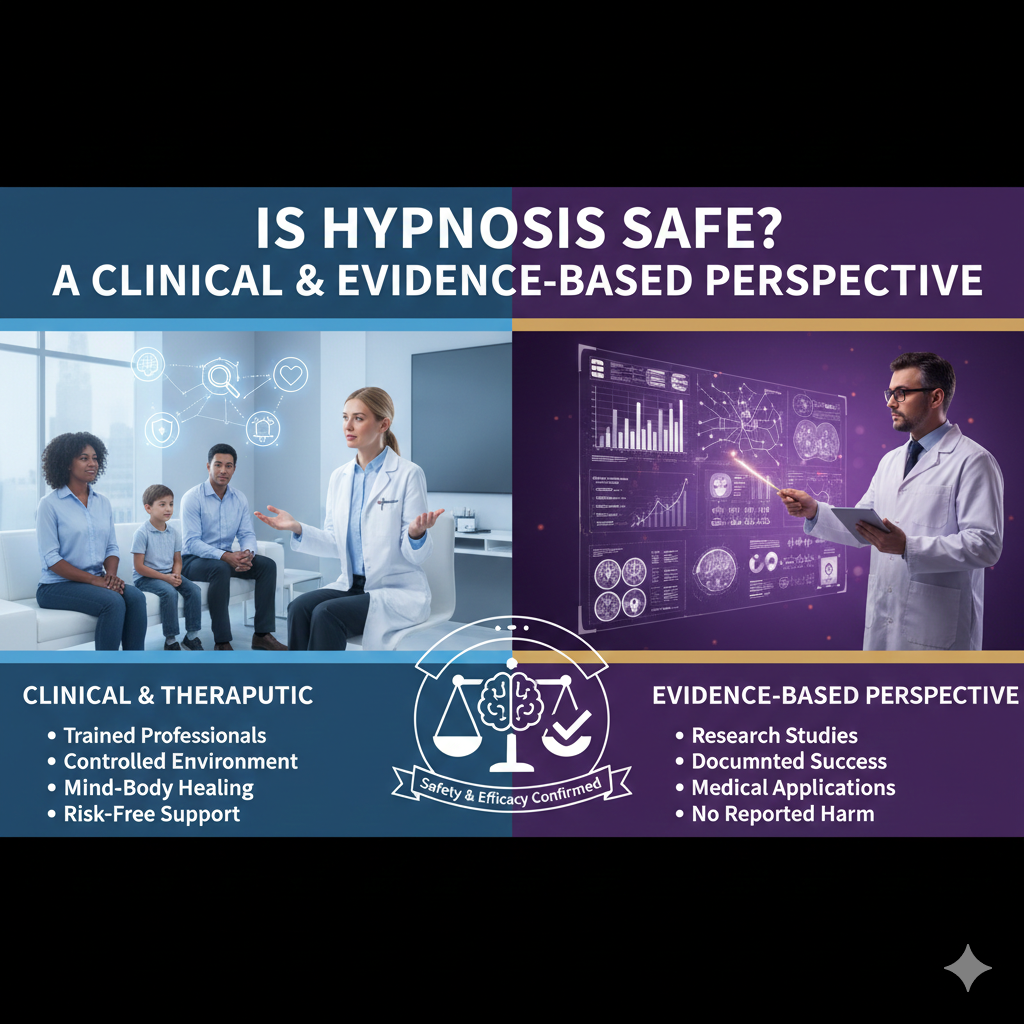
To answer the question properly, hypnosis must be examined through a clinical and ethical lens rather than through entertainment or speculation. When understood and practiced correctly, hypnosis is widely regarded as a safe and controlled therapeutic approach. However, like any method that works with mental processes, its safety depends on how it is used, who is guiding it, and whether appropriate boundaries are respected.
This article provides a clear, balanced explanation of hypnosis safety, based on professional practice rather than assumptions.
Why Hypnosis Is Considered Safe in Clinical Practice
Hypnosis is considered safe primarily because it works with natural mental processes rather than against them. It does not introduce foreign substances into the body, does not alter brain chemistry artificially, and does not override conscious awareness. Instead, hypnosis uses focused attention and guided awareness, both of which are natural cognitive functions.
In a clinical context, hypnosis is not designed to overwhelm the mind or push it beyond its limits. The hypnotic state is typically one of calm alertness. The individual remains aware, oriented, and capable of independent thought throughout the session. This level of awareness is a key reason hypnosis is regarded as non-invasive and low risk.
Another reason hypnosis is considered safe is that it does not bypass personal values or moral judgment. The mind retains its filtering mechanisms even in hypnosis. Suggestions that conflict with an individual’s beliefs, ethics, or sense of safety are automatically rejected. This protective function remains active at all times.
Awareness and Control During Hypnosis
One of the most persistent fears about hypnosis is the idea of losing control. This belief is largely influenced by stage hypnosis and fictional portrayals, not by clinical reality.
In therapeutic hypnosis, individuals do not lose awareness or control. They can hear everything that is being said, understand it, and choose how to respond internally. They can speak, move, ask questions, or stop the session at any point. Hypnosis does not place someone under another person’s control.
Clinically, hypnosis is best described as a cooperative process. The practitioner guides attention, but the individual’s mind remains active and self-directed. This collaboration is essential for safety and effectiveness.
If hypnosis required surrendering control, it would not be ethically acceptable in therapeutic practice. The fact that it preserves autonomy is central to its clinical use.
The Role of the Practitioner in Hypnosis Safety
While hypnosis itself is a natural mental state, the safety of hypnosis therapy depends heavily on the practitioner. A trained and ethical practitioner follows clear professional standards that protect the individual’s psychological well-being.
Before any hypnotic work begins, a responsible practitioner takes time to understand the individual’s background, concerns, and goals. This initial assessment helps determine whether hypnosis is appropriate and how it should be applied. Clear communication, informed consent, and transparency are essential parts of this process.
During the session, the practitioner monitors emotional responses and adjusts the approach as needed. Hypnosis is not rigid or scripted. It is responsive and client-centered. This flexibility is important for maintaining safety, especially when working with sensitive emotional material.
Ethical practitioners also recognize limitations. Hypnosis is not used to diagnose medical conditions or replace psychiatric care. When an issue falls outside the practitioner’s scope, referral to another professional is the appropriate and safe course of action.
Possible Side Effects of Hypnosis
In general, hypnosis has very few side effects, especially when compared to many medical or psychological interventions. Most people experience hypnosis as relaxing and grounding. However, as with any introspective process, mild and temporary effects can occur.
Some individuals may feel tired, emotionally reflective, or mentally quiet after a session. Others may experience emotional release as the mind processes internal material. These responses are usually short-lived and settle naturally.
Serious adverse effects from hypnosis are rare and typically associated with improper use or lack of professional judgment. This reinforces the importance of working with a trained and ethical practitioner.
Hypnosis does not cause dependency, memory loss, or loss of identity. These concerns are rooted in myths rather than evidence.
Is Hypnosis Dangerous?
Hypnosis is not inherently dangerous. It does not damage the brain, alter personality, or erase memories. However, like any therapeutic tool, it must be used appropriately.
Problems arise not from hypnosis itself, but from misuse. For example, attempting deep emotional work without proper training or ignoring psychological contraindications can create discomfort. This is why hypnosis should never be treated casually or used without adequate understanding.
When hypnosis is practiced responsibly, with attention to individual readiness and mental health context, it is considered safe by clinical standards.
Who Should Approach Hypnosis with Caution
Although hypnosis is safe for most people, there are situations where caution is necessary. Individuals experiencing severe psychiatric conditions, such as active psychosis or unmanaged dissociation, may require specialized care beyond general hypnosis practice.
Similarly, individuals with unresolved trauma may need a practitioner who is specifically trained in trauma-informed approaches. Hypnosis is not unsafe in these cases, but it must be applied with additional care and appropriate expertise.
Ethical practitioners do not proceed blindly. They assess suitability and adjust or decline hypnosis when necessary. This professional discretion is part of what makes hypnosis safe when practiced correctly.
Hypnosis Safety vs Common Myths
Many safety concerns about hypnosis are based on myths rather than facts.
One common myth is that someone can become “stuck” in hypnosis. This has no scientific basis. Hypnosis is a temporary mental state that naturally resolves on its own, even without guidance.
Another myth is that hypnosis can make someone reveal secrets or act against their will. This belief misunderstands how suggestion works. The mind remains selective and protective at all times.
There is also a misconception that hypnosis weakens the mind. In reality, hypnosis relies on focus and engagement, not weakness or passivity.
Clarifying these myths helps create a realistic understanding of hypnosis safety.
Online Hypnosis and Safety Considerations
With the rise of online hypnosis sessions, safety concerns have expanded to include digital formats. From a clinical perspective, online hypnosis is considered safe when conducted professionally.
Key safety factors include clear communication, a stable and private environment, and proper preparation. The hypnotic process itself does not change simply because it is delivered online. Awareness, control, and consent remain the same.
Online hypnosis should still follow ethical guidelines, including assessment and aftercare. When these standards are met, online hypnosis is regarded as a safe and accessible option.
A Balanced Clinical Perspective
Hypnosis is neither risky nor magical. It is a psychological tool that works with attention, perception, and subconscious processing. Its safety lies in its non-invasive nature, respect for autonomy, and reliance on natural mental functions.
Like any therapeutic method, hypnosis is safest when used by trained professionals who understand both its capabilities and its limits. When these conditions are met, hypnosis is widely considered a supportive and responsible approach to mental and emotional well-being.
Understanding hypnosis safety requires separating facts from fear. When evaluated clinically rather than theatrically, hypnosis emerges as a method grounded in awareness, ethics, and care.